

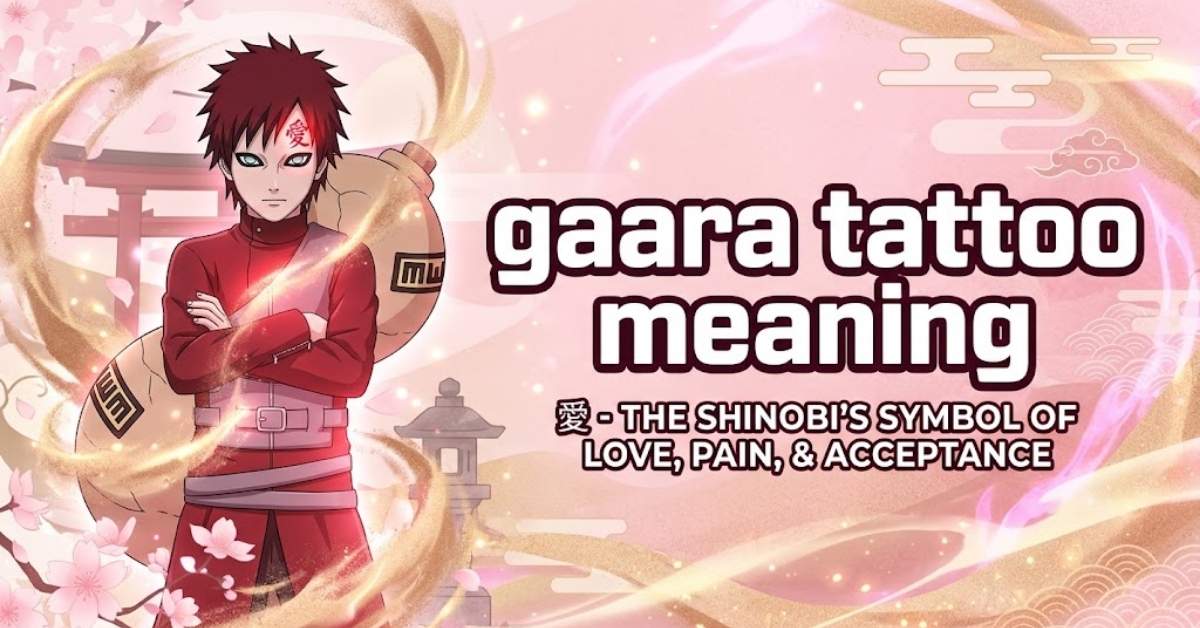
Gaara’s forehead symbol is one of the most recognizable details in Naruto. It represents love, but its meaning goes much deeper than a simple feeling. Gaara grows up feeling unwanted, feared, and isolated from others. His childhood experiences shape the way he understands love and trust. Eventually, he marks his forehead with the Japanese kanji for love, 愛. This symbol reflects his decision to rely on himself when he believes nobody else cares about him. However, his story doesn’t end with loneliness. Through friendship, hardship, and personal growth, Gaara learns to understand love differently. His forehead tattoo becomes a reminder of both his painful past and his changing identity. Understanding its meaning helps fans appreciate his character beyond his appearance.
Gaara Symbol Meaning – Quick Meaning
Gaara’s forehead symbol is the Japanese kanji 愛, pronounced ai, which means “love.” In the story, however, it represents something more personal. Gaara adopts the symbol after a painful childhood experience changes how he sees himself and others. He believes he can depend only on himself. Therefore, the symbol reflects self-love, emotional isolation, and survival.
Here are its main meanings:
- Love: The direct meaning of the kanji.
- Self-preservation: Gaara’s determination to keep living despite rejection.
- Loneliness: His belief that nobody truly cares about him.
- Identity: A permanent reminder of the person he once became.
- Personal growth: A symbol that gains deeper meaning as Gaara changes.
For fans, the tattoo represents both pain and resilience. It isn’t simply a sign of hatred or cruelty. Its emotional meaning depends on understanding Gaara’s journey throughout Naruto.
Where Did Gaara’s Symbol Come From?
Gaara’s symbol comes from his childhood in Sunagakure, the Hidden Sand Village. As a child, he struggles to find affection and acceptance. His status as the jinchūriki of Shukaku makes other villagers fear him. His own experiences deepen his isolation.
A devastating encounter with his uncle, Yashamaru, pushes Gaara toward a new understanding of love. After believing that someone close to him has betrayed him, Gaara concludes that he can trust only himself. He then uses his sand to carve the kanji for love into his forehead.
The symbol reflects his decision to protect his own existence, even when he believes the world rejects him.
Important details include:
- The character is 愛, meaning love.
- Gaara creates the mark himself.
- The symbol reflects his emotional state at that point in the story.
- Its significance develops as he changes.
This background makes the tattoo central to Gaara’s character rather than a random design.
Why Is the Gaara Symbol So Powerful?
Gaara’s forehead symbol feels powerful because it connects an ordinary word with an extraordinary emotional struggle. Love usually suggests affection, trust, and connection. For Gaara, it initially represents a painful decision to live for himself because he believes nobody else will love him.
That contrast gives the symbol its depth. It reveals how rejection can shape someone’s understanding of relationships and belonging. Yet Gaara’s story also shows that painful experiences don’t have to define someone forever.
The symbol matters for several reasons:
- Emotional depth: It reflects Gaara’s loneliness and inner conflict.
- Visual storytelling: A single character communicates part of his history.
- Character development: It becomes more meaningful as Gaara matures.
- Fan connection: Many viewers relate to its themes of acceptance and resilience.
Gaara’s journey also reminds viewers that strength doesn’t require emotional isolation. Support, friendship, and understanding can change how a person sees the world.
Gaara Symbol Meaning in Real-Life Conversations
Fans often discuss Gaara’s tattoo when talking about anime symbolism, emotional struggles, or favorite characters. The symbol can become a starting point for conversations about loneliness, self-respect, and personal growth.
However, its meaning depends on the discussion. Someone might mention it while sharing fan art. Another person might use it to explain why Gaara is their favorite character. Others may simply admire its connection to the story.
Here are a few examples of how fans might discuss it:
- “Gaara’s forehead symbol has such a sad backstory.”
- “I like how its meaning changes as he grows.”
- “That one kanji tells you so much about his childhood.”
These are illustrative examples rather than quotations from actual users.
If you’re discussing the tattoo online, remember that fictional symbols often carry meanings beyond their literal translations. Context helps you understand what another fan wants to express.
WhatsApp Conversation
WhatsApp conversations between anime fans often include short comments about memorable characters and scenes. Gaara’s forehead symbol can lead to discussions about his childhood, personality, and development.
Example conversation:
A: Why does Gaara have that symbol on his forehead?
B: It’s the kanji for love. His backstory explains why he chose it.
A: I thought it meant he hated everyone.
B: Not exactly. He believed he could rely only on himself after feeling rejected.
This exchange shows how a simple question can lead to a deeper discussion. The character literally means love, but Gaara’s personal interpretation initially reflects isolation and survival.
If someone shares a picture of Gaara in a group chat, you might ask about the symbol before discussing its meaning. That approach encourages a friendly conversation without assuming every fan knows the entire storyline.
Instagram DM
Instagram DMs give anime fans a place to discuss character edits, tattoos, artwork, and memorable scenes. Gaara’s forehead symbol often attracts attention because it is simple yet emotionally significant.
Example conversation:
A: Gaara’s forehead tattoo looks cool in this edit.
B: It does, but the story behind it is pretty heartbreaking.
A: What does it mean?
B: It means love. For Gaara, it reflects the loneliness he experienced growing up.
The conversation shows the difference between appreciating a design and understanding its narrative meaning. Both reactions are valid, but knowing the backstory adds another layer.
If you share Gaara fan art, you can mention the kanji’s meaning in the caption. You could also discuss how his understanding of love changes throughout the series. This gives followers more context than simply calling the tattoo an attractive anime design.
TikTok Comments
TikTok comments often feature short reactions to anime scenes, character transformations, and emotional edits. Gaara’s symbol works well in these discussions because viewers can recognize it quickly, even when they haven’t watched every episode.
Example conversation:
User 1: Gaara’s backstory makes this symbol hit differently.
User 2: Right! It means love, but his childhood changes how he understands it.
User 3: His character development is honestly amazing.
Short comments can communicate strong feelings, but they sometimes leave out important details. Someone might describe the tattoo as a sign of self-love, while another fan may focus on loneliness or survival.
Both interpretations can relate to Gaara’s story, especially when people distinguish the kanji’s literal meaning from its personal significance.
When commenting on an anime edit, explain which part of the story shaped your interpretation. That small detail can make the discussion more thoughtful and help other viewers understand your point.
Text Message
A text message about Gaara’s symbol might focus on its meaning, backstory, or connection to his character development. Unlike a detailed fan discussion, texting usually favors short and direct explanations.
Example conversation:
A: What does Gaara’s forehead tattoo mean?
B: It’s the Japanese kanji for love.
A: Why would he choose that?
B: He felt completely alone and decided to rely on himself.
A: That makes the symbol much sadder.
This exchange answers the question while leaving room for further discussion. The symbol’s literal meaning is love, but its significance comes from Gaara’s painful experiences and changing beliefs.
You don’t need to explain every plot detail in one message. Start with the translation, then mention his childhood if the other person wants more information. That approach keeps the conversation easy to follow without losing the symbol’s emotional meaning.
The Emotional and Psychological Meaning of Gaara’s Symbol
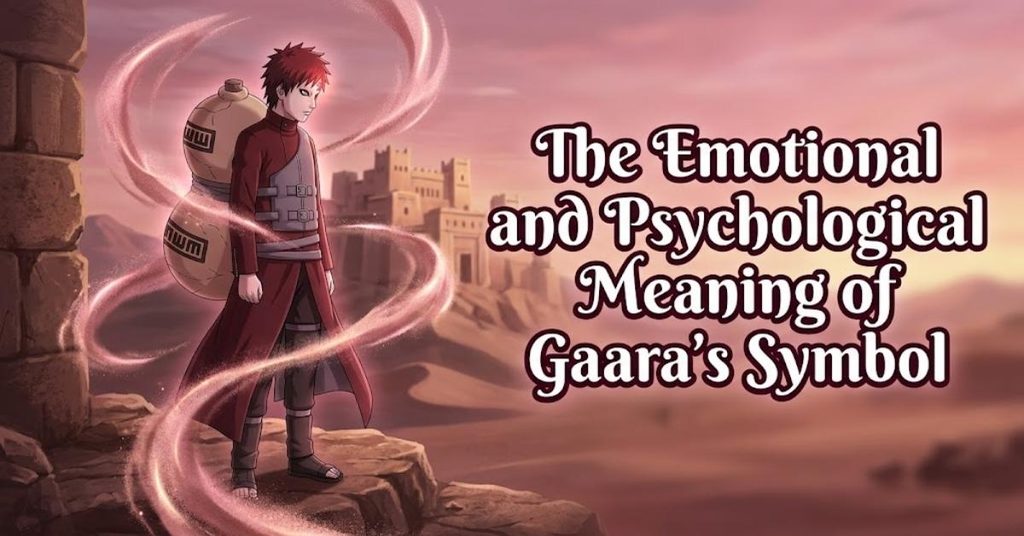
Gaara’s forehead symbol reflects the emotional effects of rejection and isolation. During childhood, he struggles to trust others because many people fear him. His experiences lead him to believe that he must protect and value himself above everyone else.
The symbol captures that mindset. It doesn’t mean Gaara begins with a healthy, balanced understanding of self-love. Instead, his early interpretation grows from pain and a desperate need to survive emotionally.
His later development adds another layer to the tattoo. Through his experiences with Naruto and other characters, Gaara learns that connection doesn’t have to weaken him. He can care about other people while still valuing himself.
The symbol can represent:
- The search for identity.
- The need for acceptance.
- The struggle to trust others.
- The difference between isolation and healthy independence.
- The possibility of personal change.
Gaara’s story shows that a painful past can shape someone without determining their entire future.
A Personal-Style Example
Imagine someone who feels excluded from a group and starts believing they must handle every problem alone. They may stop trusting others because rejection has made relationships feel unsafe.
Gaara’s early mindset resembles this pattern in a fictional setting. His forehead symbol represents his decision to depend on himself when he believes nobody else will protect him.
Consider this example:
“After being left out repeatedly, Alex decides to stop seeking approval. At first, that choice feels empowering. Over time, Alex realizes that independence doesn’t mean avoiding every relationship.”
The example reflects a theme in Gaara’s character development. Self-respect can help people maintain boundaries, but shutting everyone out isn’t the only way to stay strong.
Gaara gradually discovers that caring about others can coexist with valuing himself. That lesson makes his symbol meaningful to fans who connect with themes of resilience, belonging, and change.
Gaara Symbol Meaning in Different Contexts
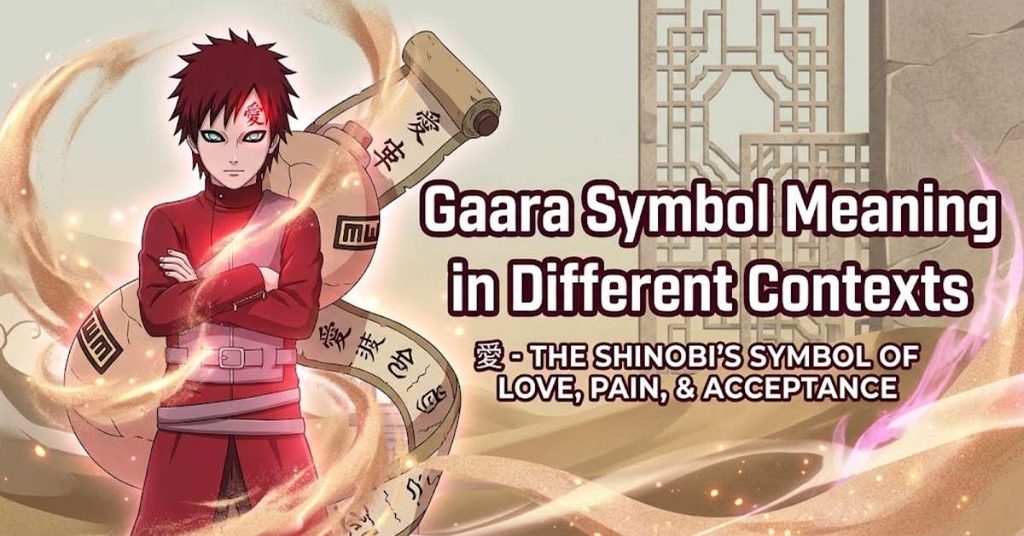
Gaara’s forehead symbol can communicate different ideas depending on where people encounter it. In the anime, it reflects his personal history. In fan communities, it often represents character development, emotional depth, or admiration for Naruto.
Some viewers focus on the kanji’s literal translation. Others emphasize Gaara’s loneliness or the way his beliefs change over time. People who haven’t watched the series may see only a Japanese character on an anime character’s forehead.
Common interpretations include:
- Love as a literal translation.
- Self-reliance shaped by rejection.
- Emotional pain and survival.
- Personal growth and acceptance.
- Appreciation for anime storytelling.
These interpretations aren’t all identical, and that’s part of the symbol’s appeal. However, the strongest explanations distinguish the character’s direct translation from the meaning it carries within the story.
Context makes that distinction easier to understand.
On Social Media
On social media, Gaara’s symbol appears in anime edits, fan art, profile pictures, cosplay, and character discussions. Fans may use it to express admiration for Gaara or highlight his emotional journey.
The symbol can also prompt conversations about its translation and the events that shaped his personality. A picture alone, however, doesn’t tell you exactly what the person sharing it intends to communicate.
For example, a fan might post Gaara’s forehead symbol alongside a caption about character development. Another might share it because they appreciate the artwork.
When discussing the symbol online:
- Explain its connection to Naruto.
- Distinguish its translation from its story meaning.
- Avoid assuming every fan shares the same interpretation.
- Respect different opinions about the character.
- Provide context when discussing its emotional themes.
Social media encourages quick reactions, but thoughtful explanations help prevent misunderstandings.
Among Friends and Relationships
Among friends, Gaara’s symbol can inspire conversations about trust, acceptance, and self-respect. Fans may discuss how his childhood affects his relationships or why his later development feels satisfying.
The symbol isn’t a universal sign of romantic love or friendship. Its direct translation means love, but its meaning in Gaara’s story begins with loneliness and self-preservation.
Consider this conversation:
Friend A: I like Gaara because he changes so much.
Friend B: Same. He starts out thinking he only needs himself.
Friend A: Then he learns to trust other people.
This discussion highlights the difference between emotional isolation and healthy independence.
If a friend uses the symbol in fan art or a message, ask what it means to them rather than assuming their feelings. Personal interpretations can vary, even when people admire the same character.
In Professional Settings
Gaara’s symbol belongs mainly to anime fandom and personal expression. In professional settings, its meaning may not be obvious to colleagues who haven’t watched Naruto.
Someone familiar with the series might recognize the kanji and understand its emotional background. Another person may simply see an unfamiliar Japanese character. Neither reaction necessarily reveals anything about the person’s values or personality.
If you use the symbol in a professional presentation, artwork, or creative project, provide a brief explanation when its meaning matters.
For example:
“Gaara’s forehead symbol uses the kanji for love and reflects his complicated relationship with acceptance.”
That sentence gives the audience useful context without requiring detailed knowledge of the series.
In formal communication, clarity matters more than assuming everyone shares the same cultural references. Explain the symbol when needed, and avoid presenting your personal interpretation as its only possible meaning.
Casual vs. Serious Meaning
In casual conversations, fans may describe Gaara’s symbol as a sign of love, loneliness, or personal strength. These short explanations work well when everyone already understands the character.
Serious discussions often examine its deeper connection to rejection, identity, and emotional development. They may also consider how Gaara’s interpretation changes as he forms meaningful relationships.
The difference is mainly one of depth:
- Casual: “It means love.”
- Character-focused: “It reflects Gaara’s decision to rely on himself.”
- Emotional: “It represents how rejection shaped his early beliefs.”
- Development-focused: “It becomes more meaningful as he learns to trust others.”
Each explanation highlights a different aspect of the same symbol.
Choose your wording based on the conversation. A short answer suits a quick question, while a detailed explanation helps when someone wants to understand Gaara’s entire character arc.
When NOT to Use the Gaara Symbol
Gaara’s symbol has a specific meaning within Naruto, so it’s worth understanding its background before using it in another context. The kanji means love, but the character’s story adds emotional complexity that a simple translation cannot capture.
Using the symbol without context isn’t automatically disrespectful. However, misunderstandings can arise when people present it as a universal Japanese sign or assign it meanings unrelated to the story.
Keep these points in mind:
- Learn the character’s meaning before explaining it.
- Distinguish anime symbolism from broader Japanese writing.
- Consider the design’s original context.
- Avoid making unsupported claims about cultural significance.
- Think carefully before choosing permanent body art.
A little research can help you appreciate the symbol without stripping away the story that makes it memorable.
Don’t Treat It as a Generic “Japanese Tattoo”
Gaara’s forehead symbol isn’t simply a decorative Japanese character. It is the kanji 愛, which means love, and its use in Naruto connects directly to Gaara’s childhood and identity.
Calling it a generic Japanese tattoo overlooks both its linguistic meaning and its narrative importance. Japanese writing includes different character systems, and individual characters can carry meanings that depend on context.
If you discuss the tattoo, describe it accurately:
- It is a kanji character.
- Its basic meaning is love.
- Gaara’s story gives it a personal significance.
- Its fictional context differs from everyday Japanese writing.
You don’t need to be an expert in Japanese to understand the symbol. However, checking reliable translations and explaining the anime connection will help you avoid oversimplifying it.
Be Careful With Permanent Tattoos
Gaara’s tattoo may inspire fans because it connects a simple character with a powerful story. Still, choosing permanent body art deserves more thought than choosing a favorite anime image.
First, understand the symbol’s translation and its meaning in the series. Then consider whether you want the design because of Gaara specifically or because the concept of love resonates with you personally.
Before making a permanent decision, consider:
- Whether you understand the character’s meaning.
- Whether the design will remain meaningful to you.
- Whether you have considered placement and visibility.
- Whether you understand the health and aftercare requirements.
- Whether you have discussed the decision with a trusted adult if you’re underage.
A fictional symbol can inspire personal reflection, but it doesn’t have to become a permanent mark. Artwork, jewelry, or a temporary design can also express appreciation for Gaara’s story.
Avoid Misrepresenting Its Meaning
The kanji on Gaara’s forehead means love. However, saying that it simply represents kindness toward everyone misses an important part of his character.
When Gaara first adopts the symbol, he believes he can love only himself. His painful experiences have convinced him that other people will never genuinely accept him. This belief shapes his early behavior and relationships.
Later, Gaara’s understanding of love becomes more complex. He learns to care about others and takes on responsibilities that extend beyond his own survival.
To explain the symbol accurately:
- Start with its literal translation.
- Describe Gaara’s emotional state when he adopts it.
- Explain how his relationships influence his development.
- Avoid confusing his early beliefs with his later values.
This distinction gives readers a fuller picture of the character. It also shows why the symbol can carry several connected meanings without having a completely different translation.
Consider Cultural Context
Gaara’s forehead symbol comes from Japanese writing and appears in a Japanese manga and anime series. Understanding that context helps viewers appreciate the difference between the character’s original meaning and its fictional use.
The kanji 愛 is used in Japanese to express love. However, Gaara’s tattoo isn’t a general cultural emblem that represents every Japanese person’s beliefs or experiences.
When discussing it, remember:
- Japanese kanji can have meanings beyond one fictional use.
- Anime often gives symbols additional narrative significance.
- Fans may interpret fictional imagery differently.
- A character’s personal story doesn’t represent an entire culture.
- Accurate translations help prevent confusion.
Cultural context doesn’t prevent people from appreciating the symbol across borders. Instead, it helps them understand what makes the design meaningful in its original setting.
Common Misunderstandings About Gaara’s Symbol
Gaara’s forehead tattoo is easy to recognize, but its meaning often gets simplified. Some viewers focus on the translation alone, while others interpret it entirely through his early personality.
Both approaches can miss important details. The kanji means love, yet Gaara’s personal interpretation initially comes from loneliness and rejection. His later growth adds further meaning to the symbol.
Common misunderstandings include:
- Assuming the symbol means hatred.
- Treating it as a universal sign of self-love.
- Believing it means Gaara loves everyone from the beginning.
- Ignoring its connection to the story.
- Assuming its significance never changes.
Understanding the difference between translation and character development makes the symbol easier to interpret. It also explains why fans can discuss its meaning from several perspectives while still referring to the same kanji.
1. “It Means Hate”
Some viewers associate Gaara’s forehead symbol with hatred because he behaves violently and distrusts others early in the story. However, the kanji itself doesn’t mean hate. It means love.
The confusion comes from Gaara’s emotional state when he adopts it. He believes that nobody will care for him, so he decides to value himself alone. This belief becomes part of his identity and influences how he treats other people.
The symbol therefore connects love with emotional pain rather than directly representing hatred.
To understand the difference, consider these points:
- Literal meaning: Love.
- Early personal meaning: Self-reliance shaped by rejection.
- Emotional background: Loneliness and mistrust.
- Later significance: Growth, connection, and a broader understanding of love.
His actions and the symbol’s translation aren’t the same thing. Recognizing that distinction helps explain Gaara’s complexity.
2. “It Literally Means Self-Love”
Gaara’s symbol is often described as a self-love symbol. That explanation captures part of its significance, but it isn’t the literal translation of the kanji.
The character 愛 means love. Gaara gives it a personal meaning after concluding that he can rely only on himself. His interpretation reflects the emotional isolation he experiences as a child.
Healthy self-love generally includes self-respect, care, and a balanced understanding of relationships. Gaara’s early mindset is more defensive. He tries to survive emotionally by rejecting the possibility of trusting others.
The distinction matters:
- The kanji literally means love.
- Gaara initially associates it with loving himself alone.
- His early interpretation grows from rejection.
- His later character development broadens his understanding of love.
Calling it a symbol of self-love isn’t necessarily wrong. However, explaining the story behind that interpretation gives a more accurate picture.
3. “It Means He Loves Everyone”
Gaara doesn’t begin his story with a loving attitude toward everyone. His early experiences leave him isolated, frightened, and distrustful. He adopts the forehead symbol after deciding that he must rely on himself.
As the story progresses, his relationships change his outlook. His interactions with Naruto play an important role in showing him that people can find connection and purpose beyond personal survival.
This development explains why the symbol can mean more to viewers than it initially does to Gaara.
Remember these distinctions:
- The kanji means love.
- Gaara initially interprets it in a self-focused way.
- He gradually learns to care about other people.
- His later actions reflect a broader sense of responsibility.
The symbol doesn’t prove that Gaara loves everyone from the start. Instead, it helps illustrate how his understanding of love develops throughout the story.
4. “It Is Just an Anime Decoration”
Gaara’s tattoo certainly contributes to his distinctive appearance, but calling it merely decorative overlooks its role in the narrative.
The symbol connects his outward appearance with his inner struggles. It reveals something about how he views himself and helps viewers understand the emotional experiences that shaped him.
Its importance comes from several layers:
- Visual identity: The mark makes Gaara immediately recognizable.
- Character history: Its origin connects to a painful childhood event.
- Symbolism: It expresses his early understanding of love.
- Character growth: Its meaning becomes richer as his beliefs change.
Anime often uses visual details to communicate ideas without lengthy explanations. Gaara’s forehead symbol is a strong example of that technique.
Its design matters, but its connection to the story makes it much more than an attractive detail.
5. “The Meaning Never Changes”
The kanji’s basic translation remains love, but its significance within Gaara’s story becomes more layered as he develops.
When Gaara first marks his forehead, he believes he can depend only on himself. The symbol reflects a defensive response to rejection and a determination to survive.
Later, his experiences help him understand relationships, trust, and responsibility differently. He becomes capable of caring for others while still recognizing his own worth.
The symbol can therefore carry several related ideas:
- Love as a literal translation.
- Self-preservation during childhood.
- Loneliness and emotional isolation.
- Personal change and maturity.
- Connection with others.
The character doesn’t suddenly acquire a different dictionary meaning. Instead, the audience understands it differently as Gaara’s story unfolds.
That distinction explains why the symbol remains powerful throughout the series.
Gaara Symbol vs. Similar Expressions
Gaara’s forehead symbol shares themes with many expressions about love, strength, and self-respect. However, it isn’t interchangeable with every symbol or phrase associated with those ideas.
For example, a heart commonly represents love or affection. A phoenix often symbolizes renewal or rebirth. Gaara’s kanji has a direct linguistic meaning, while its emotional significance comes from a specific fictional character.
| Symbol or expression | Common meaning | Difference from Gaara’s symbol |
|---|---|---|
| 愛 (ai) | Love | The kanji used on Gaara’s forehead |
| Heart | Love or affection | A broad visual symbol |
| Phoenix | Renewal or rebirth | Emphasizes transformation |
| Infinity sign | Endless possibility or continuity | Meaning varies by context |
| Self-love phrase | Respect and care for oneself | Describes a concept rather than a specific kanji |
These comparisons are general, not universal definitions. Symbols can carry different meanings across cultures and personal experiences.
Key Insight
The most important distinction is between a symbol’s literal meaning and its role in a particular story. Gaara’s forehead character means love, but his childhood gives that word a complicated emotional significance.
At first, he interprets love as something he can offer only himself. He has experienced so much rejection that trusting other people seems impossible. Over time, his relationships challenge that belief.
This is why his symbol can connect with viewers who appreciate stories about personal growth.
Three points help explain it:
- The kanji’s direct meaning is love.
- Gaara’s early interpretation reflects loneliness and survival.
- His later development shows that connection and self-respect can coexist.
A good explanation includes all three rather than reducing the tattoo to one short phrase.
If you remember only one thing, remember this: the symbol’s translation stays the same, while its emotional meaning gains depth through Gaara’s journey.
How to Respond When Someone Uses the Gaara Symbol
If someone shares Gaara’s symbol in a message, fan edit, or conversation, your response depends on what they want to communicate. They might be celebrating their favorite character, discussing the tattoo’s meaning, or expressing appreciation for its emotional themes.
You don’t need to assume that the symbol reveals someone’s personal struggles. They may simply enjoy Naruto or admire Gaara’s character development.
Useful responses include:
- Asking what the symbol means to them.
- Mentioning the kanji’s translation.
- Discussing Gaara’s character arc.
- Sharing a favorite moment from the series.
- Respecting interpretations that differ from yours.
For example, you might say, “I like how the symbol connects to his backstory.” That response opens the door to further conversation without claiming to know the other person’s feelings.
A thoughtful reply starts with reading the situation and understanding the context.
Casual Replies
Casual replies work well when a friend shares Gaara fan art or mentions the symbol during an everyday conversation. You can keep your response short while showing that you understand the reference.
Examples include:
- “Gaara has one of the best character designs.”
- “The meaning behind that symbol is fascinating.”
- “His backstory makes the tattoo much more meaningful.”
- “I love how the story develops his character.”
- “That scene makes me appreciate the symbol even more.”
These replies fit friendly discussions without turning every conversation into a detailed analysis.
If the other person doesn’t know much about Naruto, you can explain the meaning briefly. Tell them that the kanji means love and that Gaara’s personal experiences shape its significance.
The goal is to match the conversation. A short response works perfectly when someone simply wants to share their enthusiasm for the series.
Funny Replies
Humor can make anime conversations more relaxed, especially when friends are sharing memes or playful character edits. You can joke about Gaara’s recognizable design without mocking the painful experiences behind his story.
Here are some lighthearted replies:
- “One character, a whole emotional backstory.”
- “That symbol carries more lore than expected.”
- “Gaara never needed a long explanation for his design.”
- “Anime tattoos always come with a story.”
- “The character development deserves its own discussion.”
These lines focus on the storytelling rather than treating Gaara’s childhood pain as a punchline.
If your friend enjoys anime humor, a playful reply may fit the moment. However, consider the context before joking about sensitive themes. Someone discussing the emotional side of Gaara’s story may prefer a more thoughtful response.
Good humor recognizes the situation and doesn’t depend on dismissing another person’s feelings.
Mature Replies
Mature replies acknowledge the symbol’s meaning while recognizing the complexity of Gaara’s character. They’re useful when someone discusses the tattoo as an example of personal growth or emotional resilience.
Consider these responses:
- “Its meaning becomes more powerful when you understand his childhood.”
- “I think his character development changes how we interpret it.”
- “The symbol reflects his early beliefs, not just his appearance.”
- “His story shows how relationships can change someone’s outlook.”
- “The difference between translation and personal meaning is important.”
These responses go beyond saying that the tattoo looks cool. They show an understanding of the story without claiming that one interpretation explains everything.
You can also ask the other person which part of Gaara’s journey influenced their opinion. That question encourages a deeper discussion and allows them to explain their perspective.
A mature reply doesn’t have to sound formal. It simply shows thoughtfulness and respect.
Respectful Replies
Respectful replies work best when someone connects Gaara’s symbol with personal meaning. They might appreciate its themes of survival, self-respect, or learning to trust others.
However, you shouldn’t assume that sharing the symbol means someone has experienced the same difficulties as Gaara. Fictional imagery can be meaningful for many reasons, including artistic appreciation and admiration for a character.
Possible replies include:
- “I can see why this symbol matters to you.”
- “The story gives it a deeper meaning.”
- “What part of Gaara’s journey stands out to you?”
- “I appreciate the way you explained your interpretation.”
- “It’s interesting how the same symbol can mean different things to people.”
These responses invite conversation without making assumptions.
If the topic becomes personal, let the other person decide how much they want to share. Respectful communication leaves room for different experiences and interpretations.
Regional and Cultural Usage of the Gaara Symbol
Gaara’s forehead symbol has gained international recognition through Naruto. Fans encounter it through manga, anime, cosplay, merchandise, fan art, and social media discussions.
However, recognition doesn’t mean everyone interprets it in exactly the same way. Some viewers know the kanji’s Japanese meaning, while others understand it mainly through Gaara’s backstory.
Cultural background, familiarity with Japanese writing, and experience with the series can all influence interpretation.
Keep these points in mind:
- The kanji means love in Japanese.
- Gaara’s personal meaning comes from the story.
- International fans may focus on different aspects.
- Not every viewer knows the same background details.
- Cultural interpretations shouldn’t be generalized without evidence.
The symbol connects fans across countries, but its meaning becomes clearest when viewers distinguish Japanese writing from the fictional story surrounding it.
Western Culture
In Western fan communities, Gaara’s forehead symbol often appears in anime discussions, cosplay, fan art, and tattoo designs. Some fans focus on its translation, while others connect it to his loneliness and character development.
People unfamiliar with Japanese writing may recognize the symbol before understanding its meaning. Watching the series or reading an explanation can provide the missing context.
Common ways fans engage with it include:
- Sharing character edits.
- Discussing favorite Naruto moments.
- Creating fan art or cosplay.
- Comparing Gaara’s early and later personalities.
- Talking about its emotional symbolism.
These patterns describe possible fan activities rather than every Western viewer’s behavior.
The symbol’s appeal doesn’t depend on a single cultural interpretation. Its clear visual design and connection to Gaara’s story make it memorable for fans with different backgrounds and levels of familiarity with anime.
Asian Culture
Across Asian countries, fans encounter Gaara’s symbol through the same global anime communities as viewers elsewhere. However, Asia includes many languages, cultures, and writing systems, so it’s inaccurate to assume that everyone understands Japanese kanji equally well.
The symbol is Japanese writing, and its use in Naruto has a specific fictional context. Someone who reads Japanese may recognize the character’s meaning, while another viewer may know it mainly from the series.
When discussing the tattoo, distinguish these two points:
- Its linguistic meaning is love.
- Its character-specific meaning comes from Gaara’s experiences.
Fans can appreciate the design regardless of their language or cultural background. Still, accurate explanations help prevent the mistaken idea that one anime character’s tattoo represents the beliefs of an entire region.
Cultural understanding begins with context rather than assumptions.
Middle Eastern Culture
In Middle Eastern fan communities, viewers may encounter Gaara’s symbol through anime streaming, social media edits, cosplay, and conversations with friends. The symbol can appeal to fans who appreciate its visual design or the emotional journey behind it.
However, the Middle East includes many countries, languages, and cultural traditions. There is no single regional interpretation of Gaara’s tattoo that applies to everyone.
When explaining the symbol, focus on information that can be established:
- The character comes from Japanese writing.
- Its direct meaning is love.
- Gaara’s backstory gives it personal significance.
- Fans may interpret its emotional themes differently.
If someone shares the symbol in a regional fan group, asking about their interpretation can lead to an interesting conversation. Avoid assuming that their cultural background determines what the tattoo means to them.
The story itself provides the clearest starting point.
Global Internet Usage
Global internet communities have helped make Gaara’s forehead symbol recognizable to many Naruto fans. Images, fan edits, cosplay, and discussions allow viewers to share interpretations across languages and borders.
Some fans explain the kanji’s meaning. Others focus on Gaara’s early loneliness or the way his personality changes throughout the series. Both approaches can contribute to a wider appreciation of the character.
When the symbol appears online, readers may encounter it without any explanation. A brief caption can clarify its meaning and connect it to the story.
For example:
“Gaara’s forehead kanji means love, but his experiences give it a more complicated meaning.”
That explanation works for audiences who already know the character and those who are learning about him.
Online discussions become more informative when fans distinguish the literal translation from the emotional significance developed throughout the narrative.
Gen Z vs. Millennials
Gen Z and millennial fans may encounter Gaara’s symbol through different online communities, platforms, or stages of their anime fandom. However, age alone doesn’t determine how someone interprets the tattoo.
Some fans emphasize its visual appeal. Others focus on Gaara’s childhood, personal growth, or the broader themes of acceptance and belonging.
Online trends can influence how people present the symbol, but those trends don’t establish a single meaning for an entire generation.
For example:
- One fan may use it in an anime profile picture.
- Another may discuss its kanji translation.
- Someone else may analyze its role in Gaara’s development.
These are individual choices, not fixed generational patterns.
Whether someone discovered Naruto years ago or recently, understanding the story provides a stronger foundation than assuming their age determines their interpretation.
Is the Gaara Symbol Safe for Kids?
Gaara’s forehead symbol is a fictional character mark, and discussing or drawing it is generally a normal form of anime fandom. The character itself isn’t dangerous simply because the story includes difficult emotional themes.
Parents and younger viewers may want to discuss the context behind the tattoo. Gaara experiences rejection and isolation, and some of his early behavior reflects those struggles. Understanding his later development helps explain the story’s broader message.
For children interested in the symbol:
- Explain that the kanji means love.
- Discuss how Gaara’s understanding of love changes.
- Encourage questions about the character’s behavior.
- Distinguish fictional events from real-life choices.
- Treat permanent tattoos as a separate decision requiring careful consideration.
Drawing the symbol on paper or using it in fan art differs from getting permanent body art. Younger fans can enjoy the design while learning about its meaning and context.
FAQs
Questions about Gaara’s forehead symbol often focus on its translation, Japanese writing, and connection to his childhood. The answers below separate the kanji’s literal meaning from its role in the story.
Understanding that distinction clears up several common misconceptions. The symbol means love, but Gaara’s personal interpretation changes as he grows.
Whether you’re a longtime Naruto fan or a new viewer, these answers offer a quick guide to its meaning.
What Does Gaara’s Forehead Symbol Mean?
Gaara’s forehead symbol is the Japanese kanji 愛 (ai), meaning “love.” He adopts it after painful childhood experiences convince him that he can rely only on himself. At that point, the symbol reflects self-preservation and emotional isolation. As Gaara develops, its significance becomes more complex. He learns to trust others and care about people beyond himself. The kanji’s literal meaning remains love, but the story gives it deeper emotional significance. This combination of translation and character development makes the tattoo one of Gaara’s most memorable features.
Is Gaara’s Tattoo Japanese?
Yes. The symbol on Gaara’s forehead is the kanji 愛, which Japanese uses to express love. Kanji characters originated in Chinese writing and became part of the Japanese writing system. In Naruto, Gaara uses this character as a personal mark connected to his childhood and beliefs. Its presence doesn’t mean that the tattoo is a general Japanese cultural emblem. Instead, the character uses an existing written symbol within a specific fictional story. Understanding both the linguistic background and the anime context helps explain why the design carries more meaning than its appearance alone suggests.
Why Did Gaara Tattoo Love on His Forehead?
Gaara marks his forehead after a devastating childhood experience changes how he understands love and trust. He believes that the people around him reject him and that he can depend only on himself. The kanji becomes a personal statement about living for himself despite his loneliness. This choice reflects his early mindset rather than a balanced understanding of relationships. Later, his experiences challenge that belief. Through his connection with Naruto and others, Gaara learns that he can care about people while maintaining his own identity. His tattoo therefore connects his painful past with the character growth that follows.
Does Gaara’s Symbol Mean Self-Love?
Gaara’s symbol can represent self-love, but that description needs context. The kanji 愛 literally means love. Gaara initially interprets it as a commitment to loving himself because he believes nobody else will accept him. His early understanding grows from rejection and isolation, making it different from healthy self-love based on self-respect and balanced relationships. As he matures, Gaara learns to trust others and develop a wider sense of responsibility. The symbol becomes connected to both his original struggle and his later growth. Calling it a self-love symbol captures one aspect of its significance, but it doesn’t explain the entire story.
What Does the Gaara Tattoo Symbolize?
The Gaara tattoo symbolizes love, self-preservation, loneliness, and personal identity. Its literal meaning comes from the Japanese kanji 愛. Its deeper significance comes from Gaara’s childhood and the beliefs he develops after feeling rejected. Initially, he sees himself as the only person he can love or trust. Over time, his relationships challenge that view and help him grow into a more compassionate leader. For many fans, the tattoo represents the complexity of his journey rather than one fixed emotion. Its meaning is strongest when viewers consider both the character’s early struggles and his later understanding of connection and responsibility.
Is Gaara’s Symbol a Good Tattoo Idea?
Gaara’s symbol may appeal to fans who appreciate its connection to love, resilience, and character development. Before choosing it as permanent body art, understand that the kanji means love while Gaara’s personal interpretation has a more complicated backstory. Consider whether the design reflects something meaningful to you beyond its appearance in the anime. Research the character carefully and think about how your feelings might change over time. Permanent tattoos also involve health, aftercare, and legal considerations. If you’re underage, discuss the decision with a trusted adult and follow local laws. You can also celebrate the symbol through drawings, jewelry, or temporary designs.
What Is the Japanese Symbol on Gaara’s Forehead?
The Japanese character on Gaara’s forehead is 愛, read as ai, meaning love. It is a kanji character, one of the writing systems used in Japanese. In Naruto, Gaara gives the symbol a personal meaning shaped by his difficult childhood. It reflects his belief that he must love and protect himself when he feels rejected by everyone else. As his character develops, the symbol becomes connected to broader ideas about trust, acceptance, and caring for others. The character’s translation stays the same, but its narrative significance becomes richer as viewers understand more about Gaara’s life.
Conclusion
Gaara’s forehead symbol is more than a recognizable detail from Naruto. The Japanese kanji 愛 means love, yet Gaara’s experiences give it a deeply personal meaning. During childhood, he adopts the symbol after believing that nobody will ever accept him. At first, it represents self-reliance shaped by loneliness and rejection. His story doesn’t end there, though. Through friendship and personal growth, Gaara learns to trust others and understand love in a broader way. This change makes the symbol especially meaningful to fans. It connects his painful past with the person he becomes. Ultimately, Gaara’s tattoo reminds viewers that a person’s beliefs can change and that painful experiences don’t have to define their entire future.
